The problem today
Pipework and lines are flushed in place, for example between batches. The constraint is cleaning time or rinse volume: the flush runs until the line is clean, and every extra minute is water used and a line out of service.
Where nanobubbles fit in your line
Nanobubble water replaces the flush water. The line is flushed exactly as it is today, at the same flow, with no disassembly.
- The working fluid is the same water with gas dissolved into it.
- Nothing is left behind to neutralise.
- No change to your chemistry.
Data
Bench test: eight transparent tubes, coated on the inside with poster paint and dried for three days, were flushed with either nanobubble water or tap water, four tubes each, at the same valve setting (2.2 to 2.4 L/min). A camera tracked how much of each tube had cleared over time.
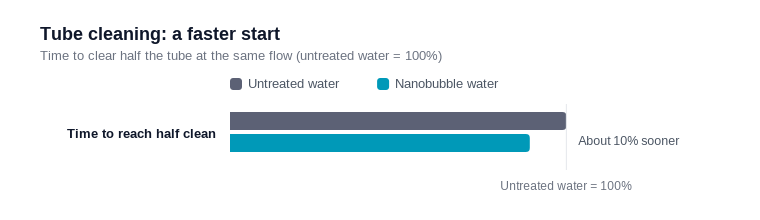
On average, nanobubble water took 123 s of flow to clear half of a tube, against 138 s for tap water: about 10% sooner. Partway through the flush every nanobubble tube was ahead of every tap-water tube. By the end of the flush both groups were about 90% clear.
Full method and results · How we make and verify nanobubbles
How it installs
Bubbles are dosed into the water at the point of use, so the working fluid is still water, delivered through the plumbing you already have.
- No disassembly of the line.
- No new tooling.